
Static shot
Keep position, orientation and focal length fixed so the performance carries the shot.
Camera movements
The camera position, orientation and focal length stay fixed. Use this example as a baseline when comparing other camera movements.
Camera view
Preparing…
Preparing…
How this movement works
The camera position, orientation and focal length stay fixed. Use this example as a baseline when comparing other camera movements.
What changes?
- No authored camera movement
What stays the same?
- Camera position
- Camera orientation
- Focal length
- The same scene assets
Practice tip
Try a still frame before adding movement; it helps establish which changes actually serve the scene.
When to use this movement
Let a performance hold the attention.
Present a stable spatial relationship.
Create a clear baseline for comparing camera moves.
Static shot vs. Dolly in
Watch both examples and compare the camera behavior. These demos use different sets, so compare motion rather than scenery.
Static shot
| Aspect | Static shot | Dolly in |
|---|---|---|
| Camera position | Fixed | Changes |
| Camera orientation | Fixed | Fixed |
| Focal length | Fixed | Fixed |
Related camera moves
Explore another real example, then copy it into your own scene.
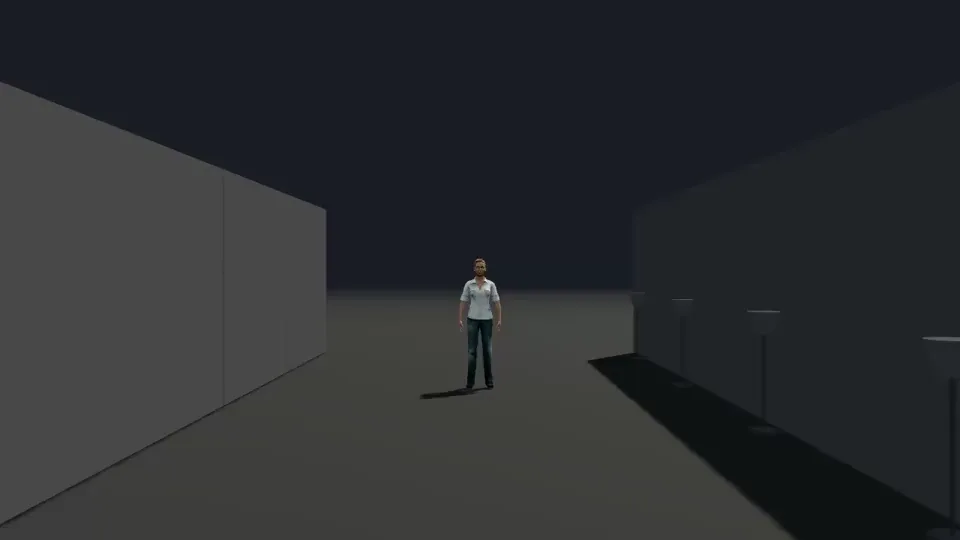
Dolly in →
Advance through a corridor toward a person, retaining the strong wall and foreground parallax.
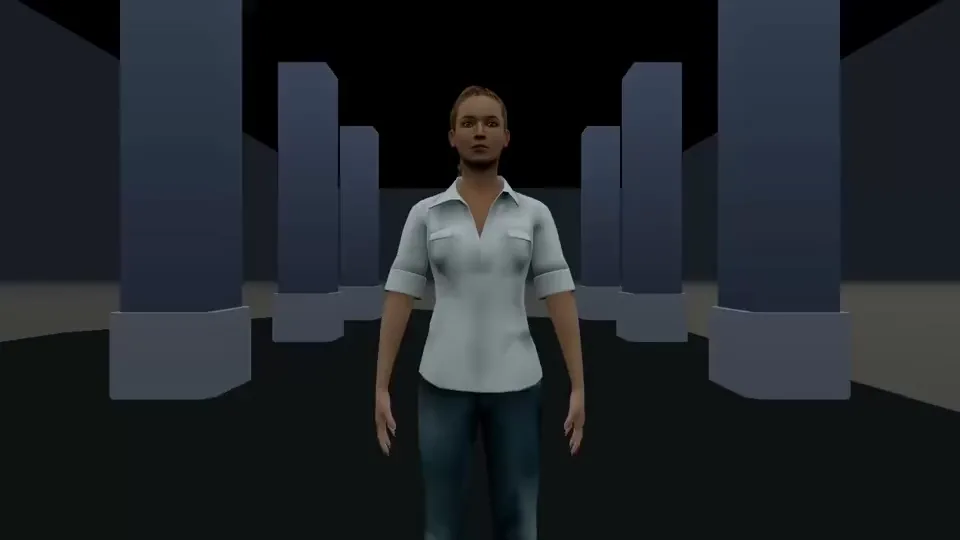
Dolly out →
Retreat from a person into the station hall as subject scale and architectural perspective change together.
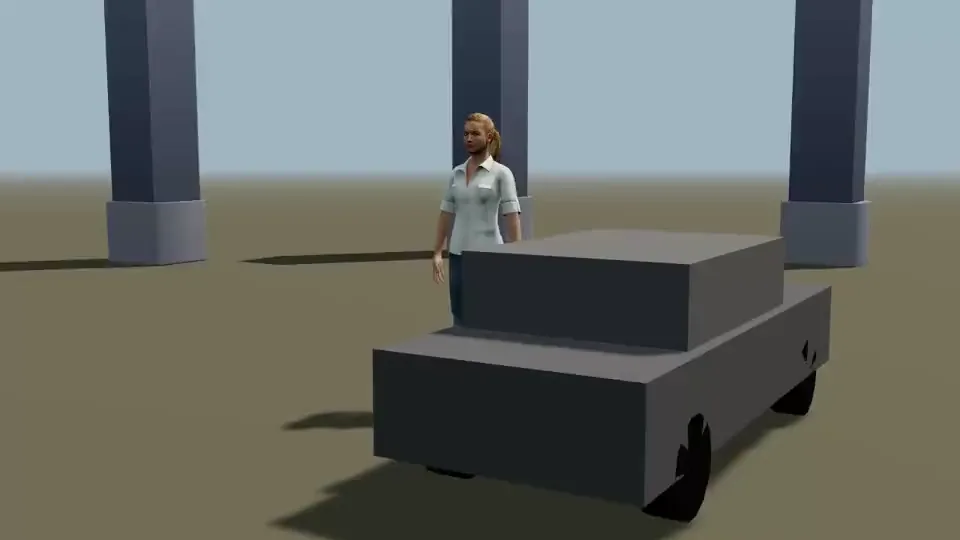
Orbit counterclockwise →
The camera travels around a car and person while tightening the frame; a fixed-radius orbit is insufficient.
Common mistakes
- Assuming a stationary camera means the subject or the entire image must also be motionless.
- Adding movement without a clear starting composition or a useful final frame.
Make it your own
Play the fixed composition, then choose Copy to create a new scene. The three camera tracks stay empty, keeping position, orientation and focal length fixed for 2–3 seconds.