
Tracking shot
The camera retreats and reframes as a person advances through a kitchen; it depends on the performance.
Camera movements
The camera moves with the subject. Compare the relatively stable subject placement with the scenery passing through the frame.
Camera view
Preparing…
Preparing…
How this movement works
The camera moves with the subject. Compare the relatively stable subject placement with the scenery passing through the frame.
What changes?
- Camera position
What stays the same?
- Camera orientation
- Focal length
- The same scene assets
Practice tip
Keep a visible background landmark to judge whether the camera and subject remain coordinated.
When to use this movement
Stay with a character through a location.
Keep a conversation visible while people walk.
Emphasize direction and speed through passing scenery.
Tracking shot vs. Static shot
Watch both examples and compare the camera behavior. These demos use different sets, so compare motion rather than scenery.
Tracking shot
| Aspect | Tracking shot | Static shot |
|---|---|---|
| Camera position | Changes | Fixed |
| Camera orientation | Fixed | Fixed |
| Focal length | Fixed | Fixed |
Related camera moves
Explore another real example, then copy it into your own scene.
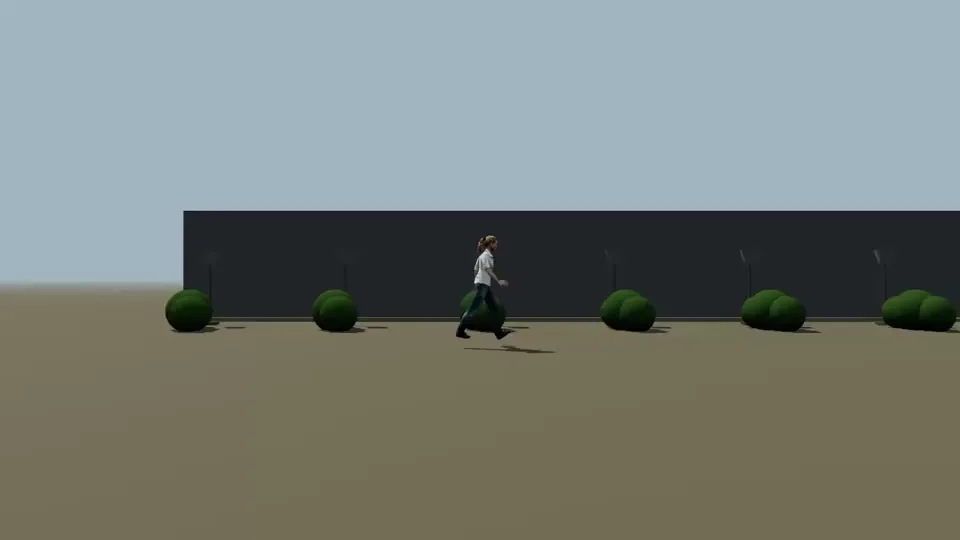
Truck right →
The reference moves alongside a walking subject. Keep the subject’s screen position stable as the background slides past.
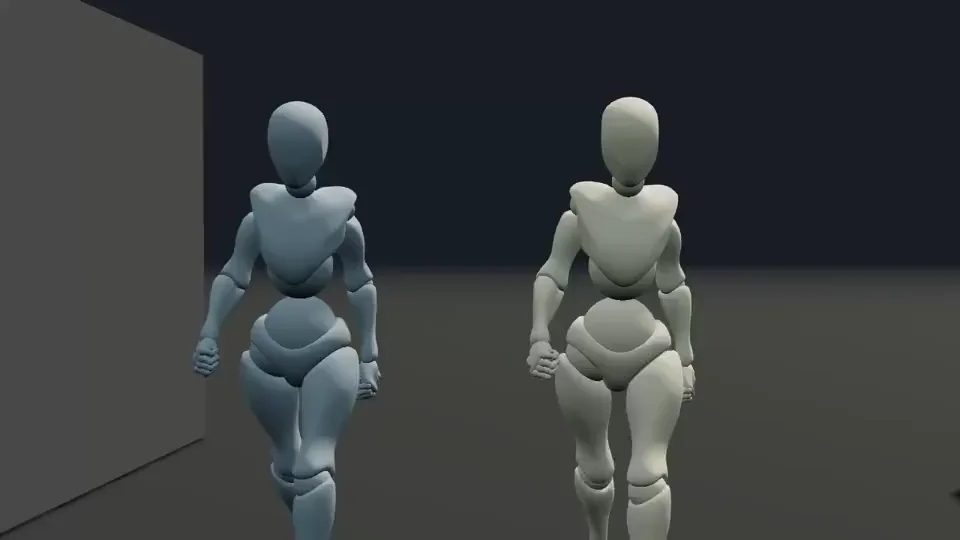
Reverse tracking / walk-and-talk →
Maintain a frontal walking two-shot; spacing and following distance both affect the result.
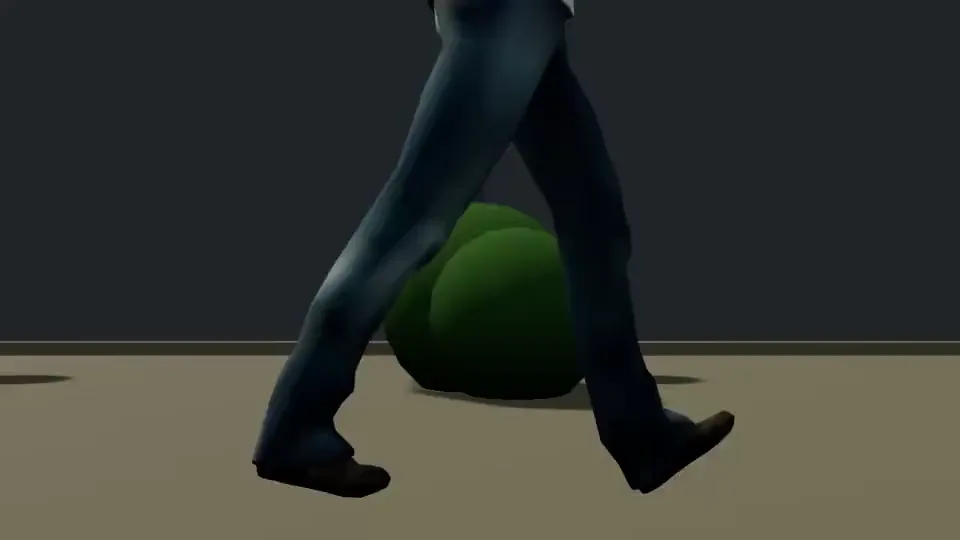
Low tracking →
Follow footsteps from a low position, retaining ground parallax and foot action.
Common mistakes
- Watching only the subject and overlooking distracting background motion.
- Adding movement without a clear starting composition or a useful final frame.
Make it your own
Play the shot to study its movement, then choose Copy to create a new scene. In the editor, adjust the subjects, set, camera position, orientation and focal length.