
Shape the Shot editorial teamUpdated
Camera blocking and composition
A stops at six seconds while B continues. Neck and upper-body pose adjustments provide the later glance. The arrangement can support a story of recognition, but the system is not inferring that emotion.
Shot-by-shot breakdown
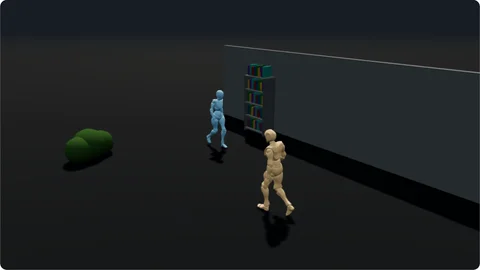
0–3 s 1. Wide view
Establish the opposing paths.
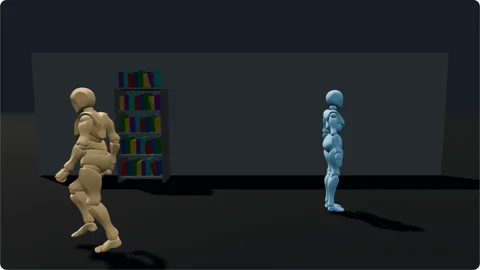
3–6 s 2. Side view
Watch the crossing and A reaching the stop.
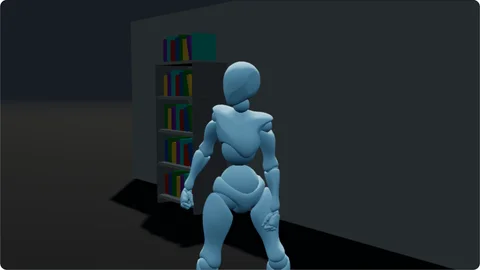
6–12 s 3. Reaction view of A
Allow time for the pause and later glance.
Try it in your own scene
Move the reaction cut earlier or later, compare the pause, and check that the glance remains visible.
About this example
Does the closer view generate facial emotion? No. It primarily communicates body orientation and timing.