
Shape the Shot editorial teamUpdated
Camera blocking and composition
Both characters walk along parallel paths. The cameras follow A, so keeping the second person visible still depends on spacing and framing. Pose adjustments add a slight head turn; there is no dialogue soundtrack.
Shot-by-shot breakdown
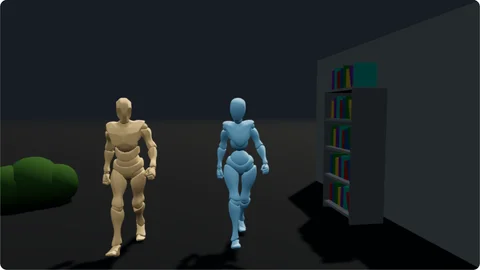
0–4 s 1. Front tracking
Read the relationship between the walkers.
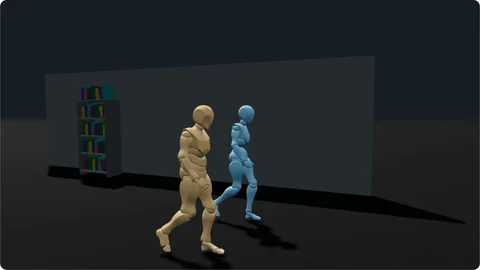
4–7 s 2. Side tracking
Check whether the near character hides the other.
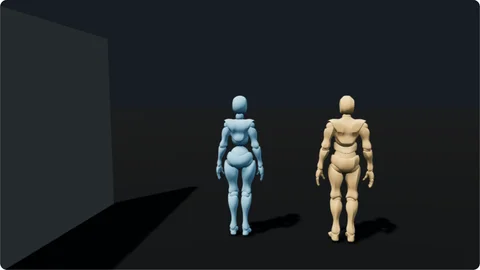
7–10 s 3. Rear tracking
Observe direction and the sense of moving away.
Try it in your own scene
Increase the spacing, compare front and side views, and adjust focal length or camera position to keep both people visible.
About this example
Does tracking automatically frame both people? No. The tracking target here is A.